
Northfield and nearby
Water Damage Drying in Northfield, MN
Our local water damage professionals dry wet framing, walls and subfloors in Northfield with controlled airflow and dehumidification. Call now; your technician uses moisture readings to choose between drying sound materials in place and removing sections that are swollen, damaged or trapping water.
- Calls answered 24/7
- Water removal and drying
- Serving Northfield and nearby
Our Structural Drying and Dehumidification Services in Northfield
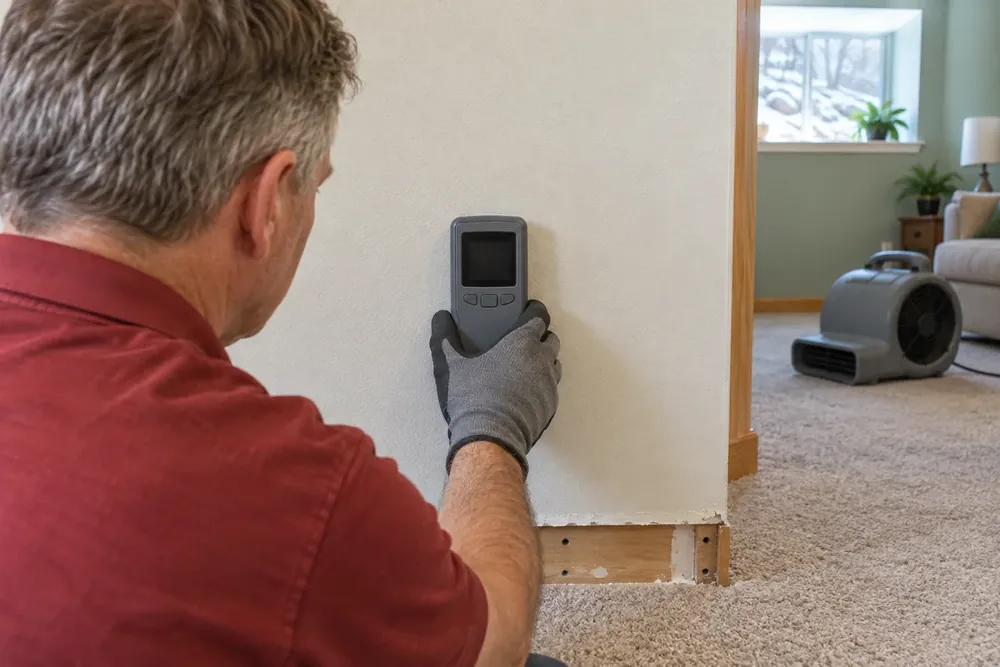
- Moisture mapping. Your technician checks framing, wall edges and subfloors to locate retained water. A dry surface and a dry wall cavity require different checks.
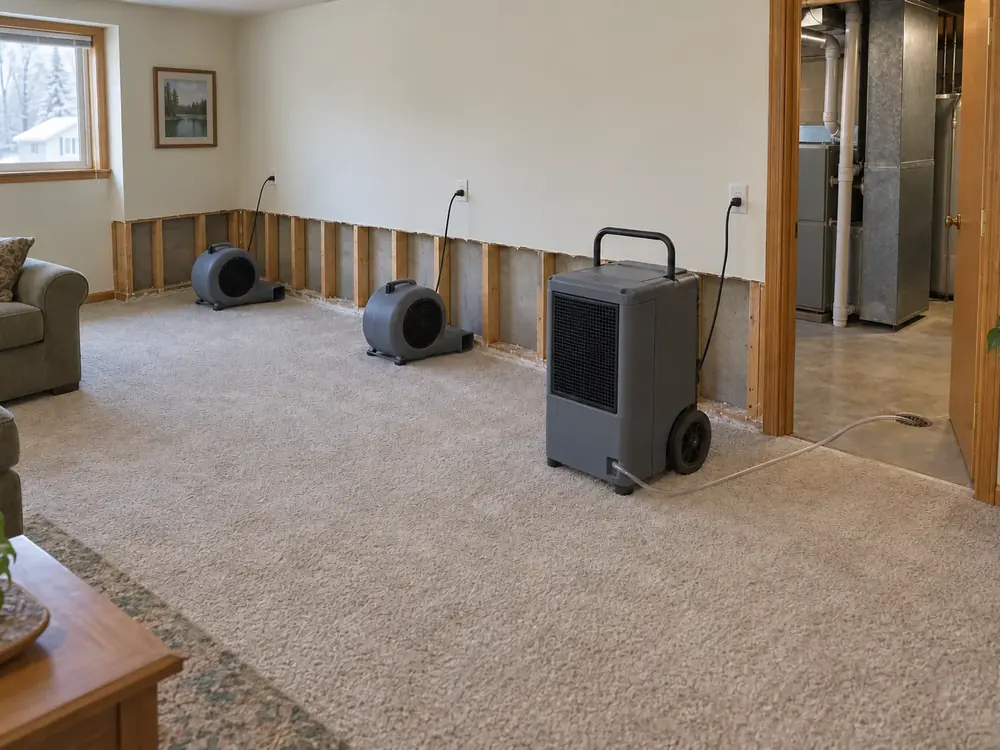
- Airflow and humidity control. Air movers encourage evaporation; for water damage, a dehumidifier removes moisture from the air. Controlled heat sometimes supports drying when appropriate for the material.
- Access where needed. Intact walls may stay in place, while swollen drywall or wet insulation needs removal. Opening selected sections gives damp framing a path to dry.
- Equipment matched to conditions. Household fans move air but don't collect moisture. Drying equipment pairs airflow with humidity control, with placement adjusted to the affected rooms.
- Seasonal adjustments. Minnesota homes closed up in winter need attention to ventilation and condensation; humid summer air adds moisture instead of reliably carrying it away. Your technician adjusts the drying conditions rather than relying on an open window.
- Progress readings. Moisture held inside thick materials may take days to release. Repeated measurements show whether drying should continue or materials are ready for the next repair stage.
Signs You Need Structural Drying and Dehumidification
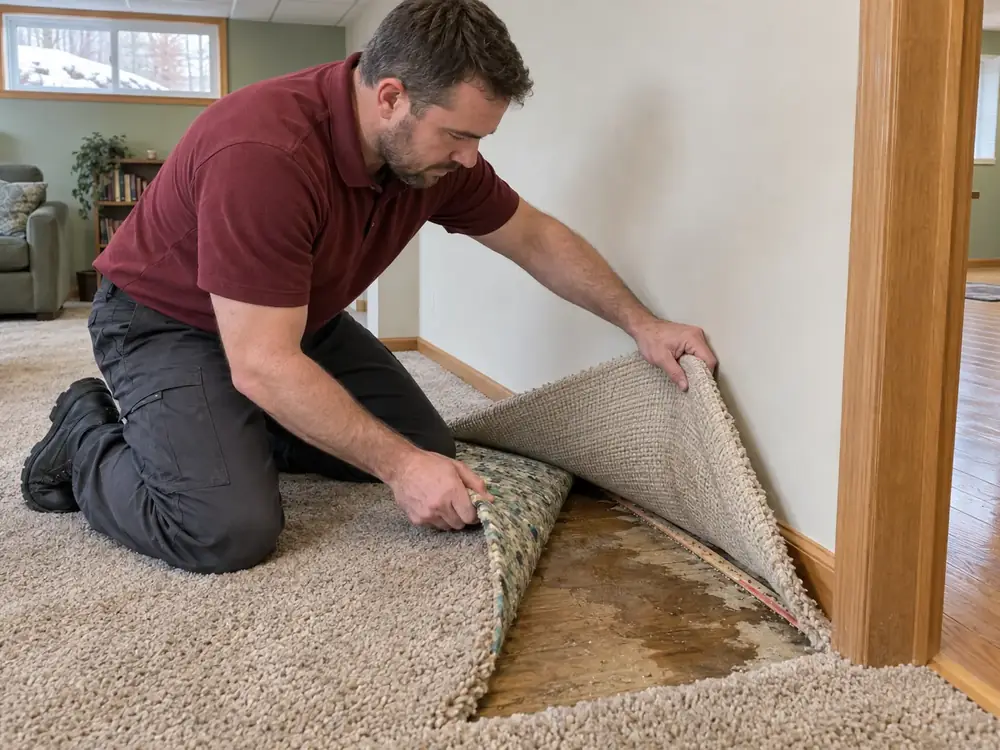
- Persistent dampness. Walls or floor edges remain wet after visible puddles are gone; call now for checks below the surface.
- Changing wall finishes. Paint blisters or baseboards swell following a leak, suggesting the affected area needs inspection rather than another coat of paint.
- Musty rooms. An earthy smell after water damage warrants attention even when exposed surfaces look dry.
- Wet adjoining spaces. Staining appears beyond the original spill or on the ceiling below, making the visible wet patch an incomplete picture.
- Repeated condensation. Windows keep fogging after a leak, pointing to excess indoor moisture that a household fan alone won't remove.
Dry Intact Materials or Open Them for Access
Drying in place suits sound materials with reachable moisture, while opening damaged sections gives trapped water a route out.
| Option | When it fits | What it involves |
|---|---|---|
| Dry in place | Materials remain intact after clean water exposure | Direct airflow, dehumidification and repeated checks without unnecessary removal |
| Open selected sections | Moisture is held behind finishes or inside insulation | Remove affected finishes or insulation to expose framing for drying |
| Remove and replace | Swelling or loss of strength makes materials unsuitable to keep | Discard damaged sections and dry the remaining structure before replacement |
Your technician decides on site from moisture readings, material condition and the water source, then explains the reason for each choice.
Our Structural Drying Process
- Call about the damp area. Describe the leak and affected rooms during the call; water damage mitigation near Northfield starts with arranging an assessment of the damage.
- Map the moisture. Your technician checks exposed surfaces and accessible cavities, separates the source repair from the drying work, and explains the proposed scope.
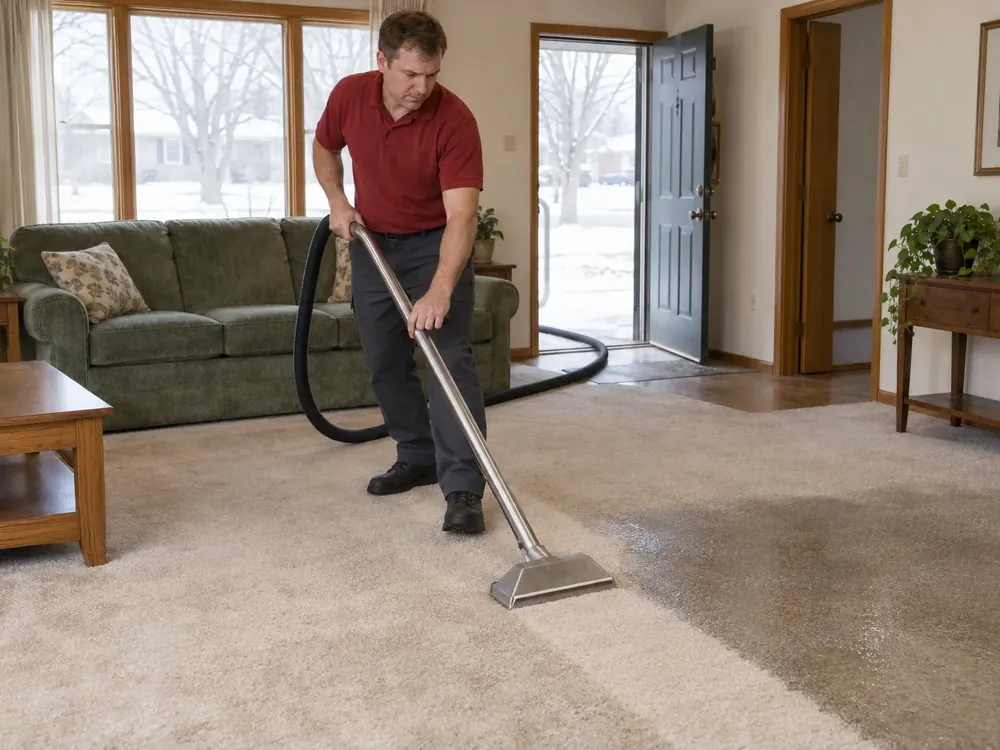
- Set up drying. Standing water is extracted, damaged barriers are opened where needed, and airflow and dehumidification are arranged around the materials being kept.
- Measure the finish. Follow-up readings track progress until drying goals are met, with photos and recorded measurements available for your paperwork before rebuilding proceeds.
What Affects Structural Drying Costs in Northfield
Drying costs depend on how far moisture has spread and the work needed to reach it.
- Affected area: Several connected rooms require a different equipment layout from one exposed wall.
- Material depth: Dense framing and layered subfloors may need longer monitoring than accessible finishes.
- Removal and rebuilding: The cost to repair drywall after water damage includes work beyond drying; ceiling access adds another consideration.
- Drying conditions: Indoor humidity, temperature and ongoing leaks influence equipment use and duration.
One of our local water damage partners explains the proposed work and its price before drying begins. See the water damage cleanup cost factors for a broader comparison.
Why Choose Northfield Water Removal for Drying
- Calls answered 24/7. Call when you notice damp walls or floors; you don't need a complete damage inventory to start the conversation.
- Local drying help. Your technician evaluates the materials at your Northfield home instead of choosing removal from a description alone.
- An explained scope. Drying, access cuts and later repairs are discussed separately, with the proposed price explained before work starts.
- Useful records. Photos, moisture readings and a written scope document the affected areas for your insurance paperwork and repair planning.
Safety While Waiting for Drying Help
Call now from a safe location and keep clear of electrical hazards while help is arranged.
- Power near water: Turn off affected power only from a dry, safely accessible position; never enter standing water to reach the panel, following CDC electrical safety guidance.
- Household fans: Don't aim fans at suspect contamination; EPA advises determining that water is clean before using fans in its water damage cleanup guidance.
- Floodwater contact: Stay out of floodwater and keep children away because it may contain sewage, chemicals or sharp debris, as explained in CDC floodwater precautions.
- Replacement finishes: Leave rebuilding until the underlying materials are dry; University of Minnesota Extension advises thorough drying before reconstruction.
Related water damage services
 Water Extraction
 Wet Carpet & Floors
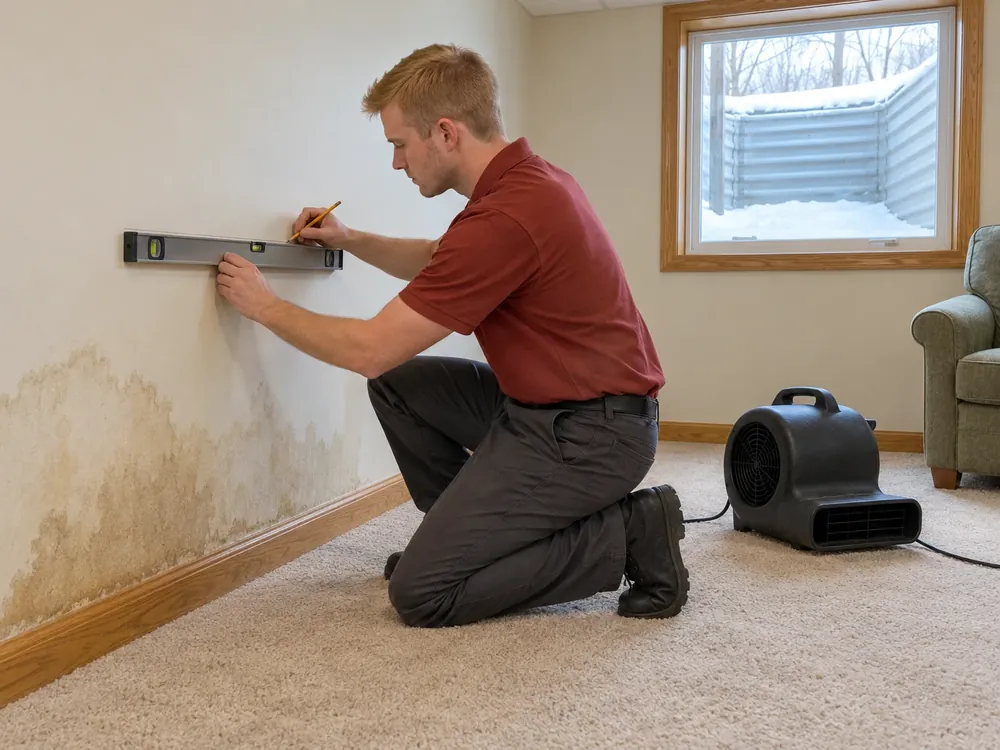 Drywall & Wall Water Damage
Areas We Serve Around Northfield
Across Northfield, Faribault and Farmington, our local water damage professionals use readings to distinguish materials worth drying from damaged sections that need removal.
Structural Drying and Dehumidification FAQs
What is water damage mitigation?
Water damage mitigation limits further damage by removing water and managing moisture in affected materials. In a Northfield home, extraction handles pooled water while structural drying targets what remains inside walls and floors. Repairing the leak stops the source; drying addresses the moisture already absorbed. Your technician explains which tasks belong in the immediate scope.
How much does water damage mitigation cost in Northfield?
The cost depends on the wet area, material condition, access and equipment time. Drying accessible framing involves different work from opening a finished ceiling. The cost to repair drywall ceiling sections after water damage also depends on the opening size and finishing work. Request a scope that distinguishes moisture removal from the later patching and painting.
Does drywall always need repair after water damage?
Drywall needs repair or replacement when damage makes it unsuitable to keep, but sound material may be dried in place. Intact seams and a firm panel support a drying assessment; swelling or deterioration favors removal. Your technician checks the cavity as well as the face so a dry-looking wall doesn't conceal wet insulation or framing.
How long does structural drying take?
Structural drying often takes days, with the finish determined by measurements rather than a fixed calendar. Exposed framing and moisture behind layered finishes dry at different rates. Equipment placement and indoor conditions also affect progress. Your technician compares readings over time and adjusts the setup when moisture remains, instead of stopping because the surface feels dry.
When should water-damaged drywall be repaired?
Repair work should follow drying of the structure behind the damaged drywall. Patching an opening immediately restores the appearance but may close off moisture that still needs to escape. Keeping access open supports drying; replacement comes after measurements show the remaining materials are ready. Your technician documents the drying result so the repair scope has a clear starting point.
Call now about damp walls or framing in Northfield so moisture readings guide drying in place or removal of damaged sections.
Call now, 24/7(507) 209-3311