
Northfield and nearby
Commercial Water Damage Restoration in Northfield, MN
Our local water damage professionals extract water and dry commercial buildings in Northfield. Sound materials may dry in place; contaminated or damaged sections need removal and replacement, with your technician making the decision from moisture readings. Call now to start a plan for your building and its occupants.
- Calls answered 24/7
- Water removal and drying
- Serving Northfield and nearby
Water Damage Services for Northfield Businesses and Property Managers
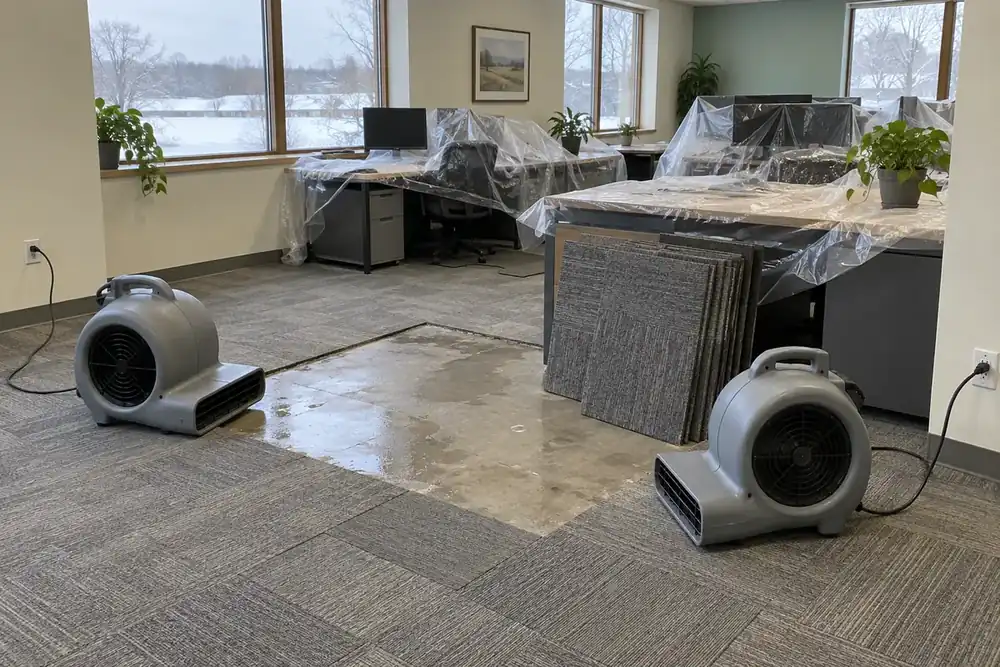
- Offices: Drying a wet meeting room may allow desks elsewhere to remain in use, while moisture beneath connected flooring calls for a wider inspection.
- Restaurants and bars: A supply leak and a contaminated kitchen overflow need different cleanup methods, with food areas separated from the work.
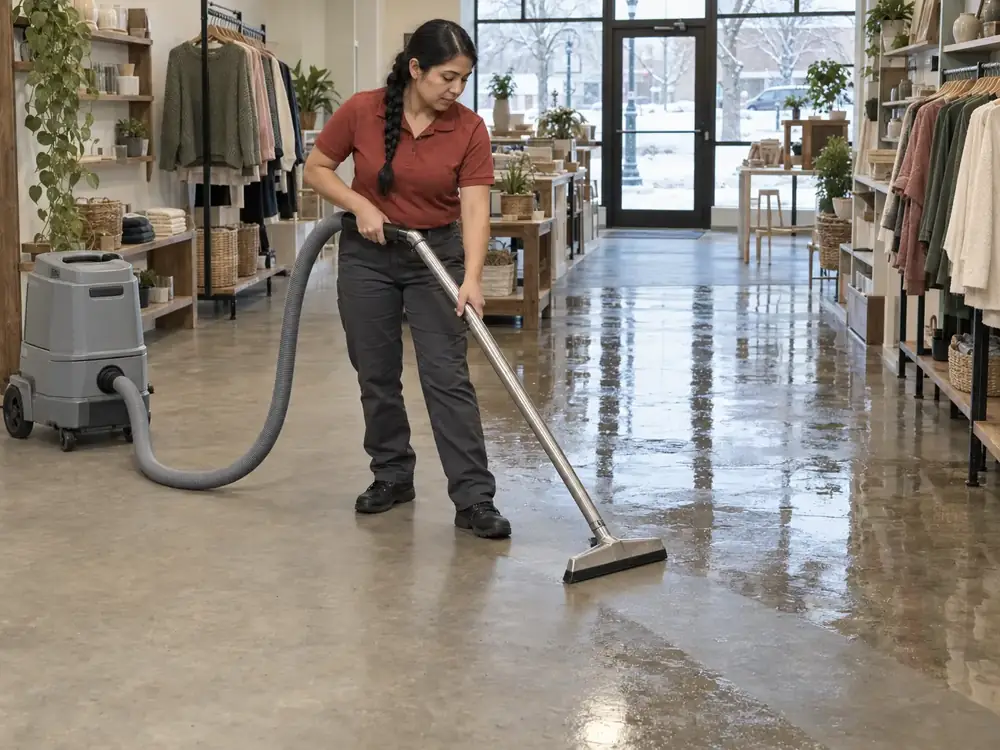
- Retail stores and shops: Your technician checks flooring beneath displays and compares drying accessible surfaces with moving fixtures to reach trapped moisture.
- Apartments and property managers: Apartment water damage needs checks in the affected unit and adjoining spaces, distinguishing a room problem from moisture crossing shared walls or floors.
- Warehouses and storage: Open concrete offers different drying access from packed shelving, so the work plan accounts for stock, aisles and loading routes.
- Schools, churches and clinics: Commercial restoration services account for occupied rooms and shared corridors, choosing isolated work areas or broader closure based on conditions.
Call now for a business building or a home; the same line handles both.
Common Commercial Water Damage Problems in Northfield
- Frozen or burst lines: A winter supply or sprinkler-line failure needs its own repair alongside drying; the National Weather Service identifies freezing water pipes as a cold-weather concern.
- Roof leaks: Flat-roof leaks need roof repair, while interior cleanup addresses wet ceilings and walls; University of Minnesota Extension explains that ice dams also trap water that leaks indoors.
- HVAC and drain overflows: A condensate overflow may affect one corner, while water inside a wall needs moisture checks beyond the visible stain.
- Restroom and floor-drain backups: Sewage requires separating the affected area and addressing contamination rather than simply drying the floor.
- Kitchen and dishwasher failures: Fixing a failed connection stops the source; extraction and checks beneath cabinets address water left behind.
- Basements, mechanical rooms and stock: Commercial flood cleanup includes assessing wet building materials separately from inventory, with inaccessible spaces needing more than surface extraction.
Keep Business Areas Open or Close for Drying
Commercial water extraction may allow limited operations or require closure, depending on the affected space and safe access.
| Option | When it fits | What it involves |
|---|---|---|
| After-hours extraction | Safe, isolated work can fit around operating hours | Planning access and equipment placement without postponing urgent water removal |
| Phased drying | Dry sections remain safely separated | Containment, clear routes and moisture checks in each work area |
| Close one area | Damage is concentrated in a room or department | Restricting entry while extraction and drying proceed |
| Close the building | Widespread water or unsafe access affects operations | Keeping occupants out while hazards and wet materials are addressed |
Your technician advises on site using moisture readings and the building layout, including access between occupied and affected spaces; the owner or manager decides whether the business stays open.
Our Commercial Water Damage Process in Northfield
- Call about the building. Describe the wet area, the type of property and whether people are working or living there; a local water damage professional takes it from there.
- Compare the work options. Your technician checks moisture and access, then explains the scope and price before work begins, including drying in place versus removing damaged materials.
- Extract and monitor. Water removal leads into targeted drying, with readings used to adjust equipment and track moisture in the affected materials.
- Review the records. The owner or manager receives photos, readings and a written scope, including final moisture checks and any remaining repair needs.
Water Damage Records for Building Owners and Managers
Owners, property managers and insurers need dated records of the affected areas and the work performed.
- Photos and video: Show room conditions and damaged stock from safe locations; wide views provide context, while close views record individual items.
- Moisture readings and scope: Keep initial measurements, drying progress and the written explanation of materials retained or removed.
- Receipts and a dated log: Separate plumbing or roof repairs from extraction, drying and replacement work, recording when each occurred.
Use the water damage paperwork guide to organize documentation for the owner, manager and insurer.
What Affects Commercial Water Damage Costs in Northfield
Commercial water damage repair costs depend on the wet materials, cleanup requirements and how work fits around building use.
- Area and water category: A small supply leak differs from contaminated water across several rooms.
- Flooring and walls: Accessible concrete differs from layered flooring or enclosed wall cavities.
- Time wet and drying days: Moisture spread and repeated readings determine the drying work required.
- Hours and occupancy: After-hours access, containment and keeping part of the business open affect the work plan.
The local water damage partner handling your building explains the proposed scope and its price before starting work. The cleanup cost guide compares the factors behind extraction, drying and replacement.
Why Businesses Call Northfield Water Removal
- Calls answered 24/7: Report water during business hours or after closing without waiting for the next workday.
- One starting point: A single call reaches a local water damage professional for an occupied workplace, rental building or home.
- An explained scope: Compare keeping sound materials with replacing damaged sections, with the price explained before work starts.
- Useful records: Photos, readings and a written scope help owners and managers follow the work.
- Town coverage: The same line covers commercial buildings in Northfield and the nearby towns on the service areas page, with the building's conditions shaping its drying plan.
Building Safety While Water Damage Help Gets Started
Call now from a dry, safe location and keep people separated from wet work areas.
- Staff and customers: OSHA identifies wet floors as slip hazards. OSHA requires guarding walking-working surfaces with hazards not fixable immediately, preventing employee use until corrected; use barriers and wet-floor signs to direct people onto dry routes.
- Water and power: Shut off the water only if safely accessible; CDC advises switching off power only from a dry location and using an electrician when reaching the switch requires entering water.
- Food and public areas: Keep sewage and floodwater away from food and customers; CDC warns that floodwater may contain sewage. Food touched by floodwater should be discarded.
- Heavy items: Ask for help with bulky loads; OSHA says they should not block stair views.
The first-hour steps explain immediate precautions while the drying plan gets started.
The Same Call Covers Northfield Homes
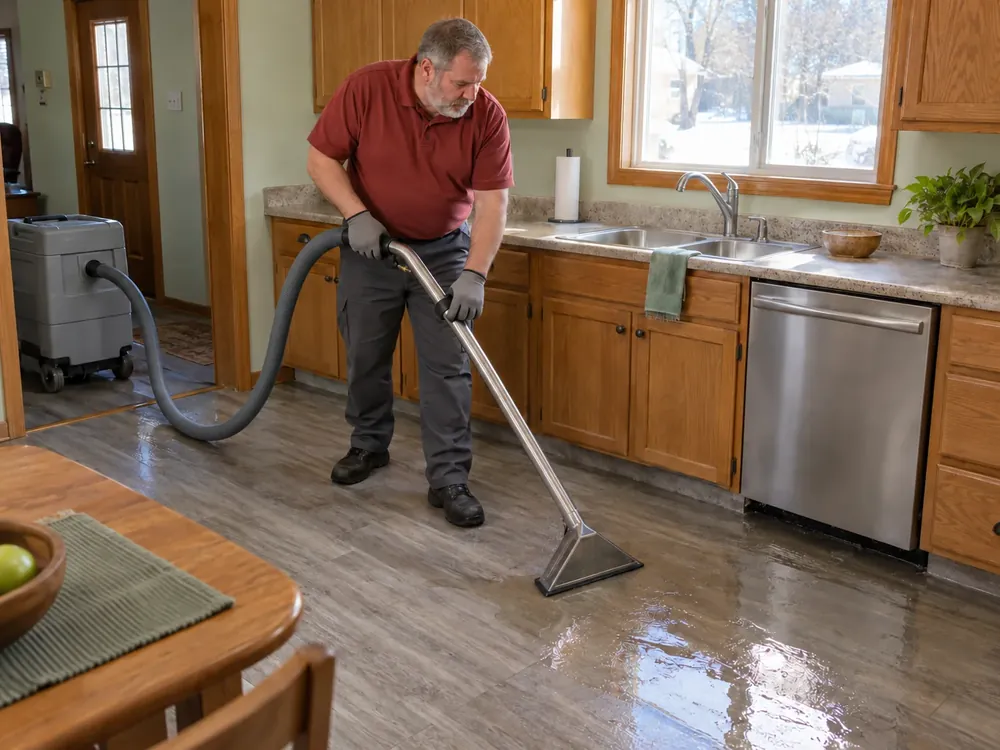
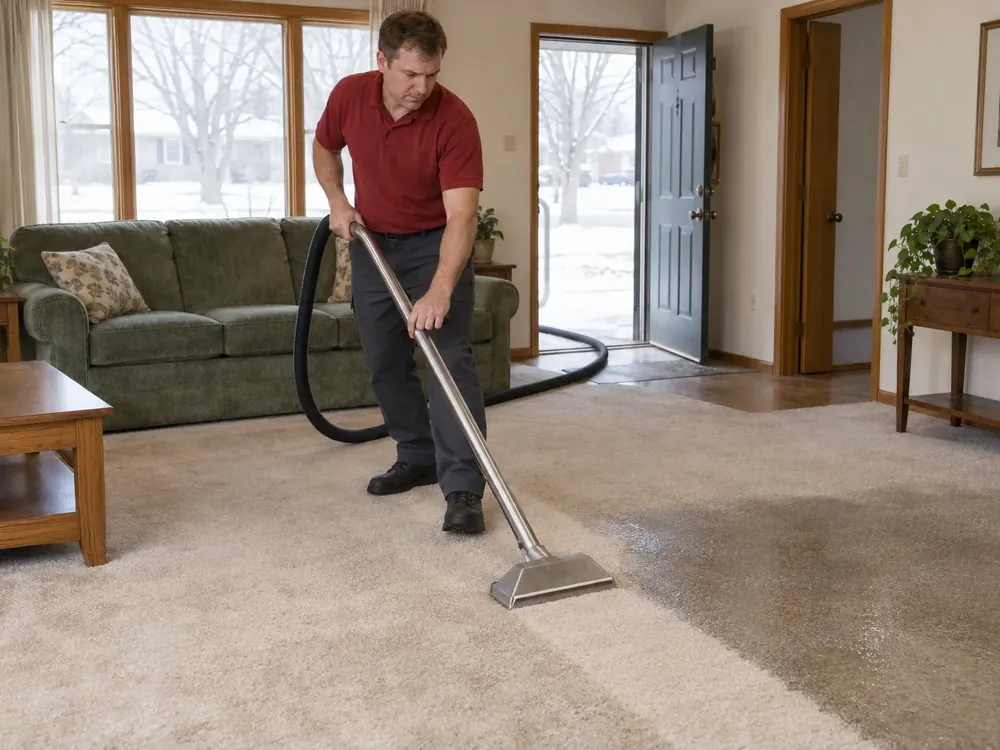
The same line handles water damage in Northfield homes, where drying decisions center on living spaces rather than customer access. The residential services below compare extraction, drying and repair needs for household rooms and materials.
 Emergency Water Removal
 Water Extraction
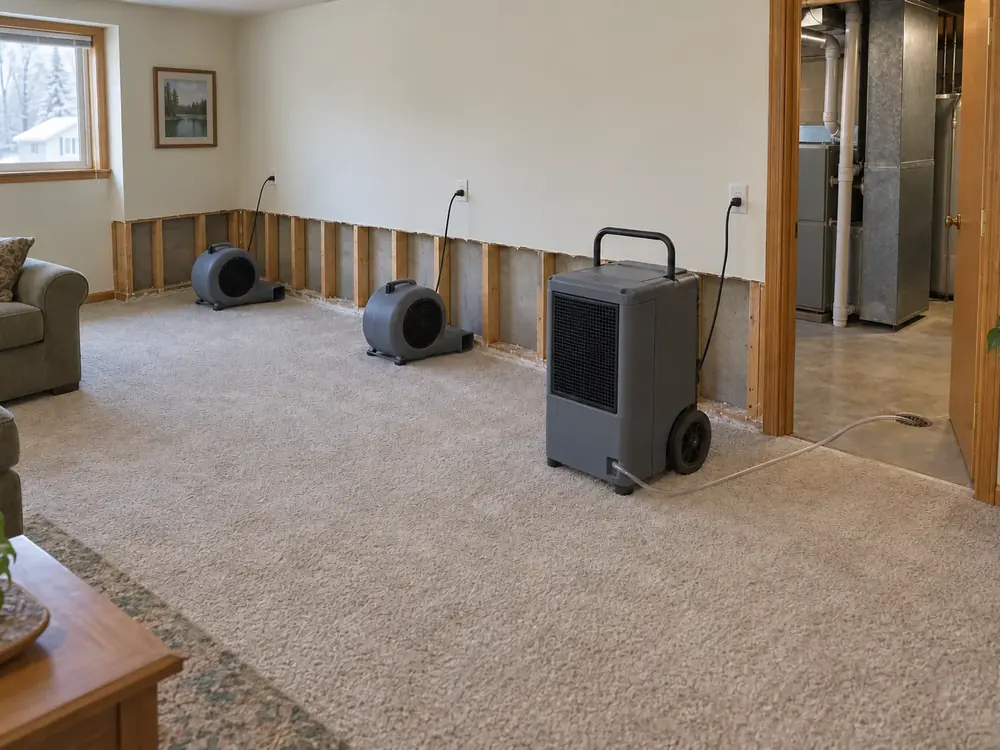 Structural Drying & Dehumidification
Areas We Serve Around Northfield
For commercial buildings in Northfield and the towns listed below, our local water damage professionals plan contained drying for isolated damage or broader work when moisture spreads.
Commercial Water Damage Questions
Does commercial water damage restoration near me include rental housing and homes?
The same call covers businesses, apartment buildings and homes in Northfield. A shop needs attention to merchandise and customer routes; a rental building needs checks around occupied units and shared spaces. Your technician assesses the wet materials and building layout, then explains where drying is practical and where removal is needed.
Can my business stay open, and can extraction happen after hours?
Some businesses keep dry areas open during contained work, and after-hours extraction is an option when safe access and the work plan support it. Widespread contamination or blocked routes may require closure instead. Call now rather than holding water removal until closing; your technician evaluates separation, access and moisture on site.
What should property managers tell a water damage restoration business first?
Call now and describe the building, affected rooms and whether tenants or staff are present. Share any source information during the conversation; completing an inspection isn't a prerequisite. A visible leak repair and the drying work serve different purposes, so your technician checks for remaining moisture even when the leak has stopped.
Who should call when water affects several tenants?
An owner, manager or tenant who discovers water should call promptly rather than wait to assemble everyone. Say which unit or shared area is affected and who handles building access. A leak confined to one room needs a different plan from moisture crossing floors; your technician checks that spread and explains the work boundaries.
What records should a commercial property keep after water damage?
Keep dated photos, video, moisture readings, the written scope, receipts and a simple timeline for the owner, manager and insurer. Separate records of source repairs from extraction and drying so each task is clear. Photograph from a safe position; your technician's measurements document hidden moisture that a surface photo alone won't show.
What changes the cost of drying a commercial building?
The affected area, water category, material layers, time wet, drying days and access arrangements shape the cost. Isolated drying may preserve sound finishes, while damaged or contaminated materials add removal and replacement work. Keeping part of a building open may also require containment. Your technician explains those choices and the proposed price before work begins.
Call now about water in your business or rental building to discuss isolated drying or wider cleanup with a local water damage professional.
Call now, 24/7(507) 209-3311