
Northfield and nearby
Ceiling Water Damage Repair in Northfield, MN
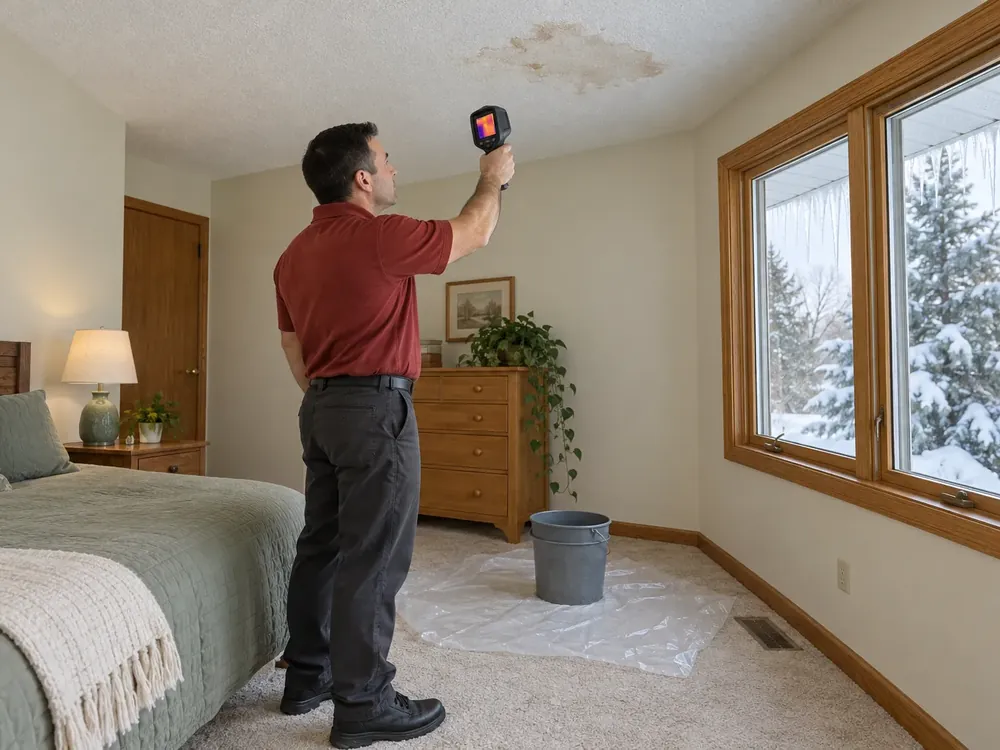
Our local water damage professionals assess and dry wet ceiling materials in Northfield, with removal where drywall has lost its strength. Call now about stains, drips or sagging: sound drywall may dry in place, while weakened sections need removal and replacement after the leak and trapped moisture are addressed.
- Calls answered 24/7
- Water removal and drying
- Serving Northfield and nearby
Our Ceiling Water Damage Services in Northfield
- Stains, drips and sagging. Your technician checks the wet area and nearby ceiling materials. A stain on firm drywall differs from a bulge holding water; stay out from under sagging sections.
- Roof source or plumbing source. Rain-related leaks point toward roof assessment, while water beneath an upstairs fixture calls for plumbing investigation. Ice dams may also send water into ceilings and insulation; source correction and interior drying are separate tasks.
- Drying or opening the ceiling. Sound drywall with a workable drying path may stay. Soft, separated or sagging drywall needs controlled removal rather than paint over the damage.
- Wet attic insulation. Inspection checks insulation above the stain, not just the visible finish. Unsuitable wet insulation is removed so hidden framing and cavities have access for drying.
- Repair planning. Repeat readings establish when retained materials are dry enough for the ceiling water damage fix, whether that means refinishing or replacing a removed section.
Signs You Need Ceiling Damage Cleanup
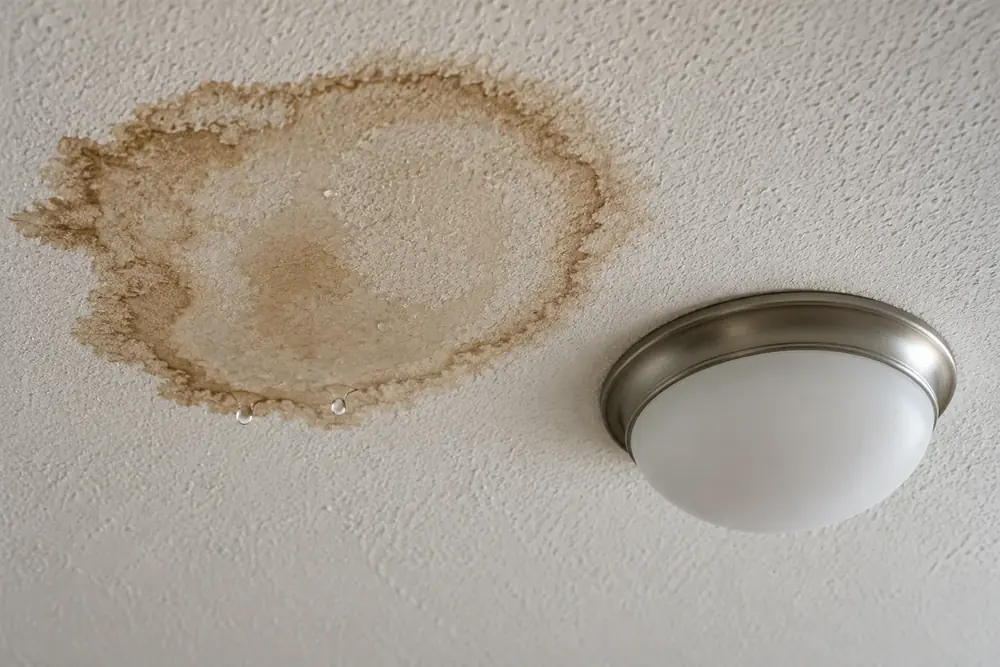
- A new brown ring or spreading stain means moisture needs assessment, even when there isn't an active drip.
- Sagging, bulging or separated drywall calls for keeping clear; a weakened ceiling needs different handling from a firm stained surface.
- Dripping near a ceiling light raises an electrical concern as well as a drying problem.
- Bubbling paint or peeling texture suggests the finish is affected; repainting won't establish whether the material behind it is dry.
- A damp odor near the ceiling or repeated staining after rain points to unresolved moisture. Call now rather than waiting for another leak.
Dry the Ceiling or Remove Damaged Sections?
Sound ceiling materials may dry in place, while weakened drywall or trapped moisture requires opening the affected area before repairs.
| Option | When it fits | What it involves |
|---|---|---|
| Dry in place | Drywall remains firm and concealed materials have an effective drying path | Source correction, controlled drying and repeated moisture checks before refinishing |
| Open a limited section | Damp insulation or a closed cavity prevents access to hidden moisture | Removing selected drywall and unsuitable insulation to reach wet framing |
| Remove and replace | Drywall sags, separates or has lost its strength | Keeping the area clear, controlled removal and replacement after surrounding materials dry |
Your technician decides on site using moisture readings and material condition, rather than the size or color of the stain alone.
Our Ceiling Water Damage Assessment and Drying Process
- Call about the ceiling. Tell the call handler whether there are stains, drips or sagging; stay clear of weakened areas while your technician takes the next steps.
- Find the wet layers. Inspection separates the roof or plumbing repair from interior drying and checks concealed moisture around the visible mark.
- Retain or remove materials. Firm drywall receives an appropriate drying plan; unsafe sections and unsuitable insulation are removed to expose the affected cavity.
- Check dryness before rebuilding. Repeat measurements document drying progress, and the repair scope identifies whether the ceiling needs surface refinishing or new drywall and insulation.
What Affects Ceiling Water Damage Repair Cost in Northfield?
Ceiling height, wet material layers and the amount of removal determine the cleanup and repair scope.
- Extent: A localized stain differs from water moving across several ceiling bays.
- Access: Tall ceilings and tight attic spaces change how wet areas are reached.
- Materials: Retaining sound drywall requires different work from replacing drywall and insulation.
- Finishing and source repair: Texture matching, painting and the separate roof or plumbing repair affect the overall project.
Before work starts, your local water damage partner explains the selected approach and the price attached to that scope. The water damage cost overview separates cleanup, drying and rebuilding factors.
Why Call Northfield Water Removal About Ceiling Damage?
- Calls answered 24/7. Report a fresh drip or changing stain when you notice it, without waiting to determine the source yourself.
- Local moisture assessment. Your technician checks above and around the mark, comparing material strength and drying access before recommending removal.
- Explained work and pricing. The proposed scope distinguishes retained drywall from sections requiring replacement, with pricing discussed before work starts.
- Documentation for insurance. Photos, readings and a written scope record ceiling and insulation damage; receipts complete the record of work performed.
Ceiling Damage Records for Your Insurance Paperwork
Photos, moisture readings, a written scope and receipts document ceiling damage and the work proposed for it.
- Drying in place: Keep readings and progress photos showing the ceiling materials retained.
- Removal and replacement: Keep photos of affected drywall and insulation, with the written scope distinguishing removal from rebuilding.
Call now; your technician records areas requiring access rather than asking you to stand beneath damage for photographs. The insurance paperwork checklist explains how to organize those records.
Stay Safe Around a Wet Ceiling
Keep clear of a damaged ceiling and call now from an unaffected room.
- Firm stain or loose material. Stay out from under loose drywall or sagging areas; Minnesota health guidance warns that damaged ceilings and plaster may fall.
- Safe power access or wet access. Shut off electricity only when the breaker is safely reachable without stepping into water; otherwise Minnesota health guidance directs you to an electrician.
- Interior assessment or roof work. Leave winter roof work to professionals because University of Minnesota Extension warns of injury from working on or beneath an icy roof.
Describe the stain from a safe position during the call; climbing into the attic isn't needed to request assessment.
Related water damage services
 Drywall & Wall Water Damage
 Burst & Frozen Pipe Water Damage
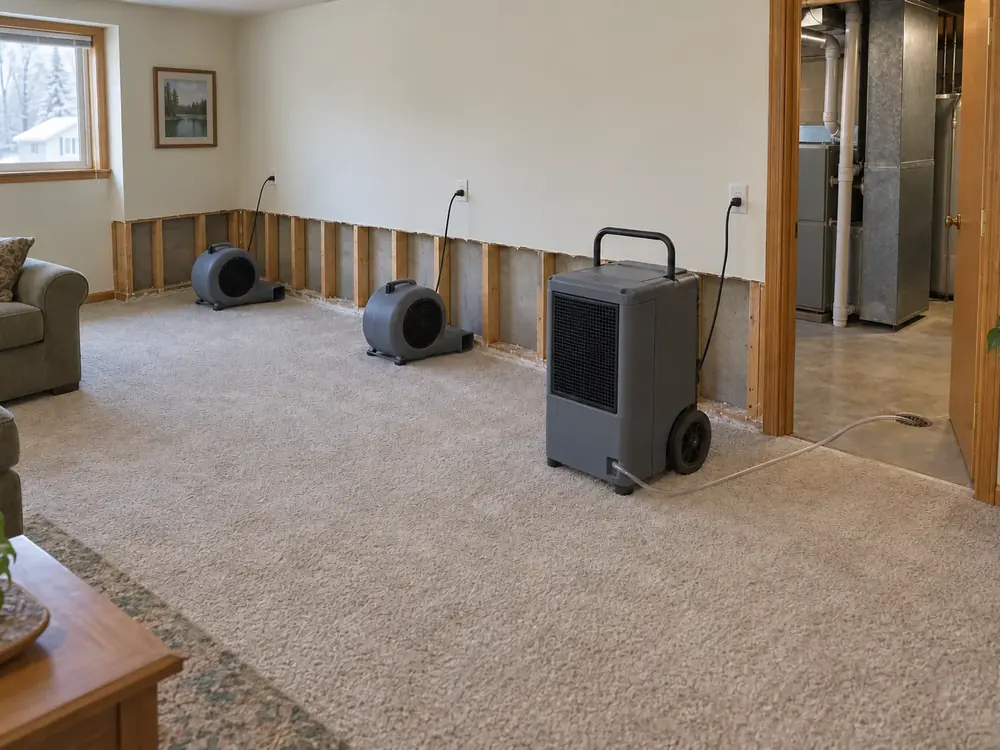 Structural Drying & Dehumidification
Areas We Serve Around Northfield
For ceiling leaks in Northfield, Farmington and Faribault, our local water damage professionals compare drying sound drywall with removing weakened sections and wet insulation.
Ceiling Water Damage Repair Questions
What does ceiling water damage look like?
Common signs include brown rings, bubbling paint, peeling texture, drips and changes in the ceiling's shape. A flat stain may sit over firm drywall, while sagging suggests a weakened area that needs isolation and assessment. Neither appearance proves how much moisture remains above the finish. Call about water damage on the ceiling, and your technician checks the affected layers.
Who should I call for water damage ceiling repair near me?
Call now for an assessment of the wet ceiling and the drying or removal it needs. A plumber addresses a leaking pipe or upstairs fixture; a roofer addresses the roof source. Your technician checks the interior damage and explains the repair scope. Stopping the drip and repairing the ceiling are separate jobs, so both need attention.
Can a wet ceiling collapse?
Yes, a water-weakened ceiling may collapse, so keep people away from sagging or loose sections. A firm stain calls for moisture assessment; sagging calls for isolating the area and controlled removal where the drywall has failed. Don't stand beneath the damage to test it. Your technician assesses strength and concealed moisture before selecting a drying or replacement approach.
What causes a ceiling leak during Minnesota winter weather?
Ice dams are one possible source: University of Minnesota Extension explains that backed-up meltwater may enter the attic and damage ceilings and insulation. A plumbing leak above the room is another possibility. Roof-source correction differs from pipe repair, but either source also requires assessment of wet interior materials. Your technician checks the damage rather than choosing the cause from the stain alone.
Can I paint a ceiling stain once the drip stops?
Paint is appropriate only after the source is corrected and the ceiling materials are dry and sound. A surface mark on intact drywall may need stain treatment and repainting; softened drywall or wet insulation requires a different repair. Your technician uses readings to check the retained materials before refinishing, rather than treating the absence of drips as proof of dryness.
Call now about a stained or dripping ceiling, and have your technician assess whether drying or controlled removal fits the damage.
Call now, 24/7(507) 209-3311